
Thriller set on a private CARIBBEAN ISLAND
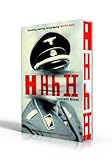
HHhH
Location(s): Prague
Genre(s): Fiction, Historical, Nonfiction
Era(s): WW2, present
The nameless narrator of “HHhH” has serious misgivings about the novel he is writing. Like Laurent Binet, the book’s French author, he has spent years examining the murder of the SS general Reinhard Heydrich in Prague in 1942 with a view to retelling the story as a thriller. But now he decides it is dishonest to invent descriptions, dialogue, thoughts and feelings on a subject as serious as this. The best he can do, he concludes, is to provide a running commentary on the truth (or otherwise) of what he is writing. “I just hope that, however bright and blinding the veneer of fiction that covers this fabulous story,” he writes, “you will still be able to see through it to the historical reality that lies behind.”
He need not sound apologetic. By placing himself in the story, alongside Heydrich and his assassins, the narrator challenges the traditional way historical fiction is written. We join him on his research trips to Prague: we learn his reactions to documents, books and movies: we hear him admit that he sometimes imagines what he cannot possibly know. And, in the end, his making of a historical novel brings a raw truth to an extraordinary act of resistance. This literary tour de force, now smoothly translated by Sam Taylor, earned Binet the Prix Goncourt du Premier Roman in 2010.
To set the stage, Binet guides us through Heydrich’s early years – his musical talent, his brief naval career and his marriage to a Nazi sympathizer – to his rapid rise as a favorite of the SS chief Heinrich Himmler. As the head of the SS security service known as the SD, he showed a special gift for bureaucracy. “His motto could be: Files! Files! Always more files!” Binet writes, adding nicely: “The Nazis love burning books, but not files.” In all, Binet concludes, “Heydrich is the perfect Nazi prototype: tall, blond, cruel, totally obedient and deadly efficient.”
In September 1941, still only 37, he became interim protector of Bohemia and Moravia, where he was soon known as the Butcher of Prague. His curriculum vitae included organizing the Kristallnacht pogrom in November 1938, forming the Einsatzgruppen death squads in September 1939 and leading the January 1942 Wannsee Conference that put in motion the extermination of Europe’s Jews. In some Nazi circles, he earned the nickname “HHhH,” “Himmlers Hirn heisst Heydrich” – “Himmler’s brain is called Heydrich.”
Even as he writes, though, Binet (or the narrator) harbors doubts about his approach. He recounts a conversation between Heydrich and his father, then reprimands himself: “There is nothing more artificial in a historical narrative than this kind of dialogue.” So he promises: “And just so there’s no confusion, all the dialogues I invent (there won’t be many) will be written like scenes from a play.” Amid myriad other digressions, he also finds time to opine on movies and books about the Nazis – and there is no denying he has done his homework.
New York Times
HHHH
By Laurent Binet
Translated by Sam Taylor
327 pp. Farrar, Straus & Giroux. $26.
.
He need not sound apologetic. By placing himself in the story, alongside Heydrich and his assassins, the narrator challenges the traditional way historical fiction is written. We join him on his research trips to Prague: we learn his reactions to documents, books and movies: we hear him admit that he sometimes imagines what he cannot possibly know. And, in the end, his making of a historical novel brings a raw truth to an extraordinary act of resistance. This literary tour de force, now smoothly translated by Sam Taylor, earned Binet the Prix Goncourt du Premier Roman in 2010.
To set the stage, Binet guides us through Heydrich’s early years – his musical talent, his brief naval career and his marriage to a Nazi sympathizer – to his rapid rise as a favorite of the SS chief Heinrich Himmler. As the head of the SS security service known as the SD, he showed a special gift for bureaucracy. “His motto could be: Files! Files! Always more files!” Binet writes, adding nicely: “The Nazis love burning books, but not files.” In all, Binet concludes, “Heydrich is the perfect Nazi prototype: tall, blond, cruel, totally obedient and deadly efficient.”
In September 1941, still only 37, he became interim protector of Bohemia and Moravia, where he was soon known as the Butcher of Prague. His curriculum vitae included organizing the Kristallnacht pogrom in November 1938, forming the Einsatzgruppen death squads in September 1939 and leading the January 1942 Wannsee Conference that put in motion the extermination of Europe’s Jews. In some Nazi circles, he earned the nickname “HHhH,” “Himmlers Hirn heisst Heydrich” – “Himmler’s brain is called Heydrich.”
To review this book, please









 Please wait...