
Novel set in ICELAND
‘The Trade’ by Debbie Parrott – third prize winner in our ‘Sense of Place’ Creative Writing Competition
8th December 2020
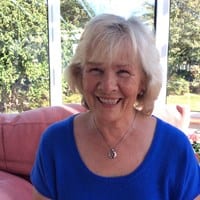 Debbie Parrott has travelled since childhood from camping across France to Antarctica and many places in between. Only in the last few years has Debbie taken to writing articles based on her Travel Diaries. She has been published in two Bradt Travel Anthologies and in the Sunday Independent on-line. The Trade is set in a village in Papua New Guinea.
The Trade
The eyes of the crocodile bulge to bursting as I creep under the spirit house. They stand upright on chiseled bodies and carved tails. I make sure not to catch their gaze. Crocodile magic is strong and they cannot be trusted.
I crouch by a bamboo that holds up the house and listen. Above me, I hear the chewing and spitting of betel nuts, then words are spat through the window sprayed on droplets of red juice.
‘Ol kam. Ol kam.’
They come. They come. I have only two days.
‘Mitsel! Mitsel! Get away from there!’ My mother, like a pig breaking cover, charges at me.
Her grip is like crocodile jaws as she pulls me away.
‘Men,’ she hisses, ‘men only in the haus tambaran. Do you want another punishment?’
I didn’t. Pebbles clatter and roll in my stomach as I remember the length of string with a tight ball of stinging nettles tied to one end. It had being swung high in the air before slicing down to whip my legs. Weeks later, the pain was still a splinter in my head.
I follow my mother back to the house dragging my toes in the dirt, making snake trails. I know she will be thinking of extra jobs.
‘But that’s not fair, that’s Elijah’s job.’
The slap still burns my ear as I find the first piece of firewood. This is not a girl’s job. Leaves, as big as my face, shine with rain and I bash the smiles off them to make them cry. I rip off a banana then throw it at a butterfly, it misses – shame. I snatch up wood, chop off teasing flower heads until, finally, the angry crocodile inside me quietens. I allow the hornets in my head to buzz and bump into each other. I need a plan.
I thought back to the last time they had come with their big white feet that left no toe marks, only strange words and patterns in the dust. They carried bags, not babies, on their backs. They bought presents and my mother traded a yam mask for a bag of rice but it wasn’t rice. The box was full of small crunchy things – things that made noises when you put coconut milk on them.
‘Why mother? Why do they make that noise?’
‘Because it’s nasty, evil food,’ and she threw the box away.
I still have the box, I keep it in my sleeping corner and I have learned the difficult words on it from my teacher, Sister Marie-Josef. I love the boys called Snap, Crackle and Pop but most of all I love the words. They are words that Jesus never says in the bible: he does not talk of the “vitamins” and “ingredients” in his loaves and fishes. They are new fresh words like unfolding leaves and I want more.
I go to find my mother. She is sweeping the house.
‘Mother, will you trade with the white people again?’
Swish! Dust, grit and a dead beetle graze my toes.
‘After the last time? No!’
So I would have to trade. I wanted more words. I would have to make my own yam mask.
I decide to visit my cousin, Rebecca. She is very old, seventeen, and has just had a baby. I peer down at baby Joseph, he looks a like big, wriggling grub. I know not to say that.
‘Can I see where he was born?’
Before she can straighten her puzzled face, I walk straight to the room on the side of the house. Women come to this room once in a full-moon but they do not always come out with a baby even though they stay in there for five days trying to get one. I think you have to wait until the spirits of the forest are not too busy.
‘Rebecca, can I have these?’
She looks up as I hold out the cutters made of bamboo.
‘You’ve finished with them now that you have cut the rope tying Joseph to you.’ I had seen a niece born, it was disgusting but I know about cutting the baby loose.
She hesitates and I turn to the door.
‘Thank-you, Rebecca, and I must tell you that Joseph will need “Vitamin D for maintenance of bones”.
I march home through a tunnel of trees; the wind blows the leaves to make dancing shadows. I shiver and hope the Crocodile Spirit isn’t hungry.
‘Aghhhh!’
Elijah blocks my way.
‘What have you got in your bag?’
He is taller and older than me and, as my brother, often fights children when they call me names. I clutch the string bag that hangs round my neck.
‘Please don’t…’
He lunges forward, yanks hard and I feel the string cut into my neck.
I feel like a chicken heading for my mother’s cooking pot.
He plunges his hand into the bag and grabs the cutters.
‘Just what I need,’ he grins and struts off like a cockerel.
‘Feather bottom!’ I scream after him, then pray Jesus and the Crocodile Spirit will send all the leeches in the forest to cover him and then suck very hard…
The following morning I slump at my desk.
‘Michelle, Michelle, are you listening?’
‘Mitsel, Mitsel,’ my friend nudges me. Only the nuns call me Michelle, the nuns named me at the clinic and only the nuns can pronounce it.
I look up. I know I will be forgiven – I am clever. I smile the smile of the Madonna.
I can’t think and subtract and my pencil draws ideas for a yam mask. I need cutters. Sister Marie-Josef sits at the front, sweating in her black bat’s clothes and cutting paper stars for Christmas. Snip… snip…snip. I sit very still. Jesus says, ‘thou shall not steal.’ The Crocodile Spirit says, ‘Steal if you need to eat’. No one says you can’t borrow.
By lunchtime the heat is melting my skin.
‘Sister Marie-Josef, shall I clear away for you?’
I launch the “Madonna smile” and she replies with a thirsty quiver of lips.
Walking home, I stroke my bag and feel like a winner.
I pick up my box and hug it gently, I kiss Snap, Crackle and Pop and, with my scissors, start to cut an egg-shaped mask form the blue cardboard. I am sure the white people will like their faces. I poke in red parrot feathers to make hair and snip all around the edge to make a spiky fringe. I use snail shells for eyes and stab a crocodile tooth in for a nose. I stroke the frilly edge, hide it away and go to find a yam.
As usual my father is talking about yams to his brother. Abelam beat all the other villages last year at the Yam Festival. My father had blown the conche and everyone from all around had come to the festival carrying their yams, dangling like stretched-out skinny pigs, from long bamboos. My uncle had made the family yam mask, it was dyed brown, white and black but never ever had there been a blue one. I would trade well with a blue one made from cardboard rather than thin, battered bark.
I stand right in front of my father because I know that yams are more important.
‘Father, I got twenty out of twenty today.’
‘Good.’ He turns back to the subject of insects eating his yams.
‘I was the only one.’
‘Good. Good. The ants after rain are…’
‘Can I have a yam?’
‘Why? Yes. Go away. Now have you had trouble with mice…?’
I choose one I can carry by myself, it is smooth and fat enough at one end to fix my mask to.
The following morning they come up from the river leaving their giant, white canoe floating in the middle of the Sepik. The river looks like glossy, liquid mud. Overhanging leafy hands seem to hold the water, stopping it from spilling over the land. I run to get my yam with its blue mask tied on tightly.
The younger children are already dancing around the little black boxes that the white visitors carry. They are pointing and squealing that they see themselves in the little box but they are silly: you could not fit into such a small space. Their chief moves them to the meeting hall, they pause to smell the flowers decorating the poles and trace their fingers over all the carvings.
Then the drum beats thrum, the men slap their hands on the tight lizard skins, their feet picking up the rhythm. My heart bangs with them. In lines, the women follow, swishing and rustling their skirts, swaying as one like palm trees. The white people clap to the beat and sprinkle smiles.
Then the yam masks are brought out: it is like bringing mangos to hungry ants.
My chest thumps, I whisper into the fire smoke, ‘help me be brave, Jesus,’ and to be sure, ‘Crocodile Spirit, help Jesus make me brave.’
I step forward holding my yam.
‘Ha ha! Look what Mitsal’s got,’ laughs Moses – Peter joins in – then Isaac. Fires burn on my cheeks. Then Elijah’s clenched fist punches Moses and the laughter stops.
‘MY sister. MY right to laugh at her childish ideas.’
I can taste the shame.
The boys, like startled birds, fly away. Elijah glares after them and then at me.
The white people are staring and click-clicking but soon they turn their backs to the other masks.
I stare at the crocodile-tooth nose. A tear leaks out. Then, raising it in the air, I slam the stupid yam with its stupid mask to the ground. I sit beside it and hide the world out with my hands.
‘Are you alright?’
A soft voice, like the priest’s. I look up. She is too close with her face like soft, crumpled greens and hair the colour of sago flour. Her Bird-Of-Paradise eyes twinkle blue, as if stars are caught in them. She smiles. I scowl.
‘How much do you want for your yam mask?’
Her voice is like a stream over worn out stones – soothing.
‘I would like to trade from your bag.’
‘My bag?’
I nod.
She takes it off her shoulder and opens it. I peer in and shake my head then point at the pouch on the front. She opens it and there it is. She has unzipped a cocoon and shown me something beautiful.
A book of words.
I hold it carefully and the lady frowns, turning her eyebrows into one long, ghostly caterpillar. Then the wrinkly lines shoot up, jiggling and bouncing.
‘Have it,’ she says, ‘and I will take your mask.’
When I get home, my mother smacks me hard – twice.
‘A book,’ she shouts, ‘what can I do with a book? Why did you not bring me the bag on her back?’
I stare up at the roof and watch a spider march to the centre of her web where a fly is stuck and struggling.
‘You will stop this thing with reading, you will learn to cook, you will marry, you will have babies, you will be a good daughter.’
Tiny wings flutter. Gone.
The book flies through the air and my mother raises her knife and slams it down on the waiting taro.
‘Go.’ Chop. ‘Away!’ Chop. Chop.
Sitting in a bushy cave my finger traces the words on the book cover: Pap…u…a New Gu…in…ea. There is a spelling mistake, I think, because I do not understand how you can have a “Lonely Plan’t”? The picture on the front shows a floating canoe: it could be father’s. A piece of paper sticks out, I find the page: “The Sepik River”. My river. I did not know it was 1126km long and I wonder how many hours walk that would be. I read on and on, new words wrapping round my tongue like vines in a forest of dictionaries.
I had traded well.
 Please wait...

Love this story by Debbie Parrott and look forward to reading more.