WW2 crime mystery set in Canterbury, Kent (and London)
Ten Great Books set in IRAN
2nd May 2026
 Ten great books set in Iran.
Iran has very much been in the news of late. It is a land of staggering contrasts, where 5,000 years of civilisation meet a complex modern society. Historically known as Persia, it was the heart of one of antiquity’s greatest empires, leaving behind architectural marvels like Persepolis. Geographically, it is a rugged fortress of high plateaus and the Alborz mountains, bordered by the Strait of Hormuz.
In 2026, Iran remains a pivotal global player with a regime despised by many. It possesses massive oil and natural gas reserves. Culturally, its influence endures through Persian poetry and literature, intricate carpets, and the celebrated Nowruz (New Year) festival. Despite enduring significant recent conflicts and internal social shifts, the resilience of its 93 million people and their deep artistic heritage continue to define the nation’s soul.
Here are ten of our favourite books set in this intriguing country.
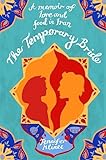
 The Temporary Bride by Jennifer Klinec
In her thirties, Jennifer Klinec abandons a corporate job to launch a cooking school from her London flat. Raised in Canada to Hungarian-Croatian parents, she has already travelled to countries most people are fearful of, in search of ancient recipes. Her quest leads her to Iran where, hair discreetly covered and eyes modest, she is introduced to a local woman who will teach her the secrets of the Persian kitchen.
Vahid, her son, is suspicious of the strange foreigner who turns up in his mother’s kitchen; he is unused to seeing an independent woman. But a compelling attraction pulls them together and then pits them against harsh Iranian laws and customs.
Getting under the skin of one of the most complex and fascinating nations on earth, The Temporary Bride is a soaring story of being loved, being fed, and the struggle to belong.
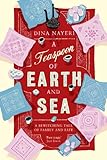
A Teaspoon of Earth and Sea by Dina Nayeri
Growing up in a small fishing village in 1980s Iran, 11-year-old Saba Hafezi and her twin sister Mahtab are fascinated by America. They keep lists of English vocabulary words and collect contraband copies of Life magazine and Bob Dylan cassettes. So when Saba suddenly finds herself abandoned, alone with her father in Iran, she is certain that her mother and twin have moved to America without her. Bereft, she aches for her lost mother and sister, and for the Western life she believes she is being denied.
All her life Saba has been taught that ‘fate is in the blood,’ which must mean that twins will live the same life, even if separated by land and sea. Thus, as time passes and Saba falls in and out of love and struggles with the limited possibilities available to her as a woman in Iran, she imagines a simultaneous, parallel life – a Western version, for her sister. But where Saba’s story has all the grit and brutality of real life in post-revolutionary Iran, her sister’s life – as Saba envisions it – gives her a freedom and control that Saba can only dream of.
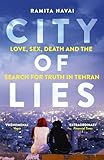
City of Lies by Ramita Navai
Welcome to Tehran, a city where survival depends on a network of subterfuge. Here is a place where mullahs visit prostitutes, drug kingpins run crystal meth kitchens, surgeons restore girls’ virginity and homemade porn is sold in the sprawling bazaars; a place where ordinary people are forced to lead extraordinary lives.
Based on extensive interviews, CITY OF LIES chronicles the lives of eight men and women drawn from across the spectrum of Iranian society and reveals what it is to live, love and survive in one of the world’s most repressive regimes.
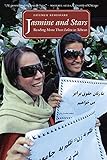
Jasmine and Stars by Fatemeh Keshavarz
In a direct, frank, and intimate exploration of Iranian literature and society, scholar, teacher, and poet Fatemeh Keshavarz challenges popular perceptions of Iran as a society bereft of vitality and joy. Her fresh perspective on present day Iran provides a rare insight into this rich culture alive with artistic expression but virtually unknown to most Americans. She warns against the rise of what she calls the “New Orientalist narrative,” which thrives on stereotype and prejudice and is often tied to current geopolitical conflict rather than an understanding of Iran. She offers a lively critique of the recent best-seller Reading Lolita in Tehran, which she says epitomizes this New Orientalist attitude. Blending in firsthand glimpses of her own life, Keshavarz paints a portrait of Iran depicting both cultural depth and intellectual complexity.
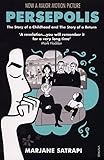
Persepolis by Marjane Satrapi
The Story of a Childhood and The Story of a Return
The intelligent and outspoken child of radical Marxists, and the great-grandaughter of Iran’s last emperor, Satrapi bears witness to a childhood uniquely entwined with the history of her country. Persepolis paints an unforgettable portrait of daily life in Iran and of the bewildering contradictions between home life and public life. This is a beautiful and intimate story full of tragedy and humour – raw, honest and incredibly illuminating.
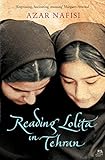
Reading Lolita in Tehran by Azar Nafisi
For two years before she left Iran in 1997, Azar Nafisi gathered seven young women at her house every Thursday morning to read and discuss forbidden works of Western literature. They were all former students whom she had taught at university. Some came from conservative and religious families, others were progressive and secular: several had spent time in jail. Shy and uncomfortable at first, they soon began to open up and speak more freely, not only about the novels they were reading but also about themselves, their dreams and disappointments. Their stories intertwined with those they were reading – ‘Pride and Prejudice’, ‘Washington Square’, ‘Daisy Miller’ and ‘Lolita’ – their Lolita, as they imagined her in Tehran. Nafisi’s account flashes back to the early days of the revolution when she first started teaching at the University of Tehran amid the swirl of protests and demonstrations. In those frenetic days, the students took control of the university, expelled faculty members and purged the curriculum.
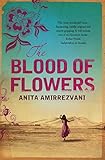
The Blood of Flowers by Anita Amirrezvani
Set in seventeenth-century Iran, THE BLOOD OF FLOWERS is the powerful and haunting story of a young girl’s journey from innocence to adulthood.
A village girl’s dreams of marriage end on the death of her father. Cast on the mercy of relatives in fabled Isfahan, she and her mother are reduced to servitude until she reveals a talent for designing carpets – an invaluable skill. Hope is short-lived, for a disastrous, headstrong act results in the girl’s disgrace. Caught between forces she can barely comprehend, she faces a life lived at the whim of others – unless she is prepared to risk everything and choose a future based on her own strength and will.
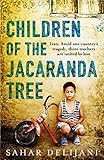
Children of the Jacaranda Tree by Sahar Delijani
Tehran, 1983. A city paralysed by fear, its people silenced. And the beating heart of the regime is Evin prison. Yet even within its walls three women dare to dream of a life beyond tyranny.
Azar gives birth to her daughter in captivity. One day the guards simply take her child from her. Parisa yearns for her tiny son, growing up a few miles away but completely out of reach. And Firoozeh, broken by cruelty, has turned her back on everything she was fighting for.
But even in the most desolate places hope can take root . . .
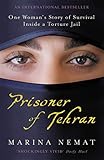
Prisoner of Tehran by Marina Nemat
Nemat tells of her harrowing experience as a young Iranian girl at the start of the Islamic revolution. In January 1982, the 16-year-old student activist was arrested, jailed in Tehran’s infamous Evin prison, tortured and sentenced to death. Ali, one of her interrogators, intervened moments before her execution, having used family connections with Ayatollah Khomeini himself to reduce her sentence to life in prison. The price: she would convert to Islam (she was Christian) and marry him, or he would see to it that her family and boyfriend, Andre, were jailed or even killed. She remained a political prisoner for two years. Nemat’s engaging memoir is rich with complex characters – loved ones lost on both sides of this bloody conflict. Ali, the man who rapes and subjugates her, also saves her life several times – he is assassinated by his own subordinates. His family embraces Nemat with more affection and acceptance than her own, even fighting for her release after his death.
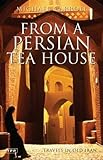
From a Persian Tea House by Michael Carroll
Drawn to the exoticism and mystery of names on a map of Iran – Isfahan, Shiraz, Meshed, Kerman, Khorassan – Michael Carroll embarked on a journey that took him through the heart of the country from the Taurus mountains to the Gulf of Oman. He travelled during a relatively calm, but nonetheless pivotal, period in Iran’s recent history – in the years following the CIA-led coup of 1953. Carroll spends much time in the bustling tea houses of Isfahan, where he observes the richness of Iranian life in microcosm and visits a Tehran that would be unrecognisable today – a sleepy town pushing towards modernity with its shiny 1950’s American cars and social elites exploring the lifestyles of a newly discovered West. From the Zagros Mountains to the Caspian shore and Persepolis to the holy city of Qom, he explores countless mosques, tombs and palaces, goes in pursuit of an elusive dervish, bargains for Silk Road jade and forges strong and lasting friendships with his Iranian travelling companions. Carroll’s beautifully written narrative is adorned with colourful episodes from Iran’s long and momentous history and enriched with anecdotes from his travels. A forgotten gem of travel writing, “From a Persian Tea House” is a literary period piece and a luminous portrait of a country that has since changed beyond all recognition.
Enjoy our selection of books set in Iran!
Tony for the TripFiction Team
Join team TripFiction on Social Media:
Twitter (@TripFiction), Facebook (@TripFiction.Literarywanderlust), YouTube (TripFiction #Literarywanderlust), Instagram (@TripFiction) and Pinterest (@TripFiction) and BlueSky(tripfiction.bsky.social) and Threads (@tripfiction)
 Please wait...