Talking Location With …. Jim Loughran: SICILY
Novel set in India – mid 20th Century
26th June 2013
Under the Jewelled Sky by Alison McQueen, novel set in India.
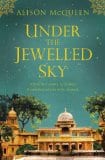 This is a well written and sumptuously evocative novel about India, where the country is one of the integral characters. Set at the time of Partition and a decade or so later, the writing style is so atmospheric, that it draws the reader back to the mid 1900s, when there was huge political upheaval and huge change, as the British began to take their leave. On occasion the writing mirrors the language of the era, the period of the formal, slightly stilted ‘Queen’s English’ of the BBC, which enhances the sense of time. It is the India not only of Maharajas’ Palaces, it is also the India of poverty, clay chillims, Sadhus, hooded cobras, and ‘the colourful business of daily life’. It is pithy, a country full of paradoxes. This is also the India where the British were at home – the author takes the reader, for example, to Ooty (Ootacamund, The Queen of hill stations) a piece of Victorian England that had ‘been scooped up and rearranged in filmic perfection, with frivolous gardens and gothic archways and a tranquil boating lake for lazy days and fishing’. You can quite imagine it through Alison McQueen’s writing.
It describes in wonderful detail the way the palaces might have functioned, and the role of the Maharanis, the wives, and the place the British might have held. Visiting a Maharaja’s Palace today – like the palaces in Jaipur …. floating on a shimmering lake – one could well imagine the cloistered movements, the opulence and the number of staff all quietly going about their business.
At the heart of the story is the friendship between Sophie, a British girl, whose Father is employed as a physician at the palace, and Jag, who is the son of a servant. In that era, such a friendship was severely frowned upon. Move on ten years and Sophie finds herself reluctantly in Delhi, married to Lucien, in an India that feels very different to the one she knew and revelled in when she was younger. Life has moved on in many ways – both in the country and for Sophie emotionally and personally, and essentially this is the story of how she tries to find some closure on things that have happened in her past.
The book, however, tends to fall down a little both at the beginning and the end. The relationship between Sophie and Jag, as we witness it developing early in the storyline, seems like that of two very young people, who feel perhaps like very young teenagers. There are kisses, but they feel quite chaste. The passion doesn’t penetrate the writing – yet it is the passion of their early friendship (and that is essentially what it feels like, a friendship rather than a relationship) that underpins the whole story going forward, and as things progress it is an unwelcome surprise to the reader to witness how things develop. Towards the end, Jag makes his arduous trip to find relatives in Amritsar, after Partition; the storyline meanders around the streets of relatives, and finally struggles to make a really meaningful conclusion to the story. A final postscript from Sophie in 1970s in California winds up the story and seems a bit random. However, despite these reservations, it made for a good read about India of that era and we are looking forward to reading The Secret Children by the same author.
Tina for the TripFiction Team
Come and connect with us a TripFiction via social media: Twitter, Facebook and Pinterest and when we have some interesting photos we can sometimes be found over on Instagram too.
 Please wait...