


 A Load of Bull by Tim Parfitt
 Leaving the Atocha Station
 What’s the Girl Worth
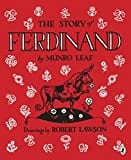 The Story of Ferdinand
 The Forging of a Rebel
 The Hive
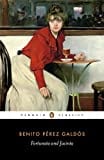 Fortunata and Jacinta
A coming-of-age novel set in NORTHERN IRELAND
Ten great books set in MADRID
22nd September 2025
Ten great books set in Madrid. Madrid, Spain’s high-altitude capital, is a vibrant metropolis celebrated for its rich artistic heritage, grand architecture, and legendary social energy. Located in the heart of the Iberian Peninsula, it serves as the political and cultural centre of the country. The city is world-renowned for its Golden Triangle of Art, anchored by the Prado Museum, which houses masterpieces by Velázquez and Goya. Architectural landmarks like the sprawling Royal Palace and the bustling Plaza Mayor reflect Madrid’s imperial history, while the sprawling Retiro Park offers a lush sanctuary in the urban center.
Beyond its monuments, Madrid is defined by its infectious lifestyle, particularly its culinary scene ranging from traditional tapas bars to Michelin-starred restaurants. Combining cosmopolitan sophistication with a warm, welcoming spirit, Madrid remains one of Europe’s most captivating and historic capitals.
Winter in Madrid by C J Sansom
1940: The Spanish Civil War is over, and Madrid lies ruined, its people starving, while the Germans continue their relentless march through Europe. Britain now stands alone while General Franco considers whether to abandon neutrality and enter the war.
Into this uncertain world comes Harry Brett: a traumatized veteran of Dunkirk turned reluctant spy for the British Secret Service. Sent to gain the confidence of old school friend Sandy Forsyth, now a shady Madrid businessman, Harry finds himself involved in a dangerous game – and surrounded by memories.
 Happy as a Partridge by Kate Boyle
Evie Fuller is quite simply fed up. Single, unemployed and rapidly approaching her thirtieth birthday, she finds London life is weighing heavy. When a month of free language lessons offers an escape route, she heads to Madrid for sun-soaked adventures and a crash course in Spanish culture. Will a change of scene restore her zest for life?
Follow Evie as she laughs, cries and adjusts to these foreign lands – a shy English girl blossoms under the Spanish sun and discovers the hardest thing about moving abroad is deciding when to come home.
A Load of Bull by Tim Parfitt
Re-issued with a new introduction and extra chapters, A Load of Bull is the hilarious true story of an Englishman sent to Madrid to help launch Spanish Vogue.
In the late eighties Tim Parfitt blagged his way into a job at Condé Nast in London and from there into a six week stint in Madrid to help launch Spanish Vogue. Six weeks turned into nine years, and helping out turned into running the company. Along the way, Tim Parfitt discovered the real ‘real’ Spain. He never saw a Costa and he certainly never bought an olive grove. Instead, he discovered a booming city in hedonistic reaction to years of fascism, where sleep was something you only did at work and where five hour lunches invariably involved a course of bull’s testicles.
Tim Parfitt’s rise from unwanted guest to paparazzi-pursued mover in Spain’s glamorous social scene is a hilarious comedy of errors. Frothing with a language designed to make foreigners dribble, hospitalised by tapa-induced flatulence and constantly frustrated by the unapproachable beauty of the women parading through the Vogue offices, he nevertheless falls in love with a city, a country and its people – despite the fact he hasn’t a clue what they’re on about.
The Fencing Master by Arturo Pérez-Reverte
Fencing is not a game but a science. The outcome is invariably the same: triumph or disaster, life or death…
It is 1868; Spain teeters on the brink of revolution. Jaime Astarloa is a master-fencer of the old school, priding himself on the precision, dignity and honour of his ancient art; his friends spend their days in cafes discussing plots at court, but Jaime’s obsession is to perfect the irresistible sword thrust. Then Adela de Otero, violet-eyed and enigmatic, appears at his door. When Jaime takes her on as a pupil he finds himself embroiled in dark political intrigues against which his old-fashioned values are no protection.
Leaving the Atocha Station by Ben Lerner
Adam Gordon is a brilliant, if highly unreliable, young American poet on a prestigious fellowship in Madrid, struggling to establish his sense of self and his attitude towards art. Fuelled by strong coffee and self-prescribed tranquillizers, Adam’s ‘research’ soon becomes a meditation on the possibility of authenticity, as he finds himself increasingly troubled by the uncrossable distance between himself and the world around him. It’s not just his imperfect grasp of Spanish, but the underlying suspicion that his relationships, his reactions, and his entire personality are just as fraudulent as his poetry. In prose that veers between the comic and tragic, the self-contemptuous and the inspired, Leaving the Atocha Station is a dazzling introduction to one of the smartest, funniest and most audacious writers of his generation.
What’s the Girl Worth by Christina Fitzpatrick
Sipping on “kiddie” cocktails, eight-year-old Catherine plays a game called “What’s the Girl Worth? ” with her father and the rest of the regulars at the Blue Lagoon bar. That would be Catherine’s last memory of her father . . . before he abandons her.
Catherine – feisty, hard-edged, and weary of men – has put herself through Boston University working as a cocktail waitress. Wanting to control her future rather than give in to the fate predetermined by her unresolved issues, she takes a summer internship in Madrid. It is in this glamorous city, with the encouragement of her new friends, that she is swept into the seductive Spanish nightlife – reveling in the exhilaration, the miraculous thrill, of being young and far from home. But it is also where she eventually confronts her past and the man whom she has missed and forever hoped for – the father who is as foreign to her as the beautiful, bright world of Spain.
The Story of Ferdinand by Munro Leaf
All the other bulls run, jump, and butt their heads together in fights. Ferdinand, on the other hand, would rather sit and smell the flowers. So what will happen when Ferdinand is picked for the bullfights in Madrid?
The Story of Ferdinandhas inspired, enchanted, and provoked readers ever since it was first published in 1936 for its message of nonviolence and pacifism. In WWII times, Adolf Hitler ordered the book burned in Nazi Germany, while Joseph Stalin, the leader of the Soviet Union, granted it privileged status as the only non-communist children’s book allowed in Poland.
The preeminent leader of Indian nationalism and civil rights, Mahatma Gandhi whose nonviolent and pacifistic practices went on to inspire Civil Rights leader Martin Luther King, Jr. even called it his favorite book.
The Forging of a Rebel by Arturo Barea
The Forging of a Rebel is an unsurpassed account of Spanish history and society from early in the twentieth century through the cataclysmic events of the Spanish Civil War.
Arturo Barea’s masterpiece charts the author’s coming-of-age in a bruised and starkly unequal Spain. These three volumes recount in lively detail Barea’s daily experience of his country as it pitched towards disaster: we are taken from his youthful play and rebellion on the streets of Madrid, to his apprenticeship in the business world and to the horrors he witnessed as part of the Spanish army in Morocco during the Rif War. The trilogy culminates in an indelible portrait of the Republican fight against Fascist forces, in which the Madrid of Barea’s childhood becomes a shell and bullet-strewn warzone.
Combining historical sweep and authority with poignant characterization and novelistic detail, The Forging of a Rebel is a towering literary and historical achievement.
The Hive by Camilo José Cela
Banned for many years by the Franco regime, Cela’s masterpiece presents a panoramic view of the degradation and suffering of the lower-middle class in post-Civil War Spain. Readers are introduced to over a hundred characters through a series of interlocking vignettes, transforming this book from a social document into a towering work of inventive fiction. Filled with violence, hunger, and compassion, The Hive captures the ambitions and constraints of life under a dictatorship.
Fortunata and Jacinta by Benito Pérez Galdós
Galdos’s four-part Fortunata and Jacinta (1886-7), the masterpiece among his almost 80 novels, tells the turbulent story of two women, their husbands and their lovers, set against the intricate web of dynastic alliances and class contrasts of Madrid in the 1870s.
Have you read any of these? Are there others you would add? Let us know in the Comments below.
Tony for the TripFiction Team
For our full collection of books set in Madrid, just access the TripFiction database
Join Team TripFiction on Social Media:
Twitter (@TripFiction), Facebook (@TripFiction.Literarywanderlust), YouTube (TripFiction #Literarywanderlust), Instagram (@TripFiction) and Pinterest (@TripFiction)
 Please wait...

And if anybody’s interested, The Assassin’s Mark – “Homage to Catalonia” meets “Murder on the Orient Express” – is now available as a very, very good audio-book: https://www.amazon.co.uk/Assassins-Mark-Jack-Telford-Mysteries/dp/B0G548F8TC/ref=tmm_aud_swatch_0
For books set in Madrid: Hotel Florida – non-fiction by Amanda Vaill recounts Ernest Hemmingway (not brave), Martha Gellhorn (really brave) and Robert Capa’s (photographer) lives at the Hotel Florida’s siege-ridden and spy-filled hotel during the Spanish Civil War.
2 Comments
Oh, yes, this very distinctive title for Madrid, thank you for taking the time to highlight them!
Oh, yes, these are very distinctive titles for Madrid, thank you for taking the time to highlight them!
And this one… David Ebsworth’s “Until the Curtain Falls”, the central story set in Madrid between December 1938 and February 1939. Intrigue and mayhem at the close of the #SpanishCivilWar.
1 Comment
So many interesting book, so little time!!
1 Comment
This is SO true!