A tale of folklore and murder, set in the SCOTTISH HIGHLANDS
Talking Location With …Annabel Kantaria: OMAN
18th July 2025
 #TalkingLocationWith… Annabel Kantaria, author of You Lied First, partially set in the beauty and wilderness of Oman.
You Lied First sees two British families go on holiday to Oman. One couple has lived there before and is familiar with the country; the other family, visiting the Middle East for the first time, is somewhat nervous of the strict laws and fully reliant on their friends’ insider knowledge of the area. But, when what should be an idyllic sunshine holiday goes suddenly and horribly wrong, both families are forced to make a difficult choice in a country whose laws they don’t know and whose language they don’t understand – a choice that will have far-reaching consequences for them all.
Located on the south-eastern coast of the Arabian Peninsula, Oman borders the UAE, Saudi Arabia and Yemen. 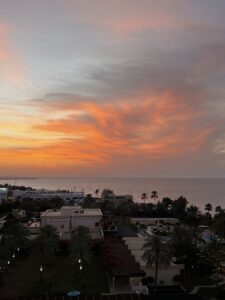 With a diverse natural landscape as well as five UNESCO World Heritage sites, it has much to offer visitors, be it hiking in the mountains, camping in the desert, lazing on a pristine beach, experiencing the bustle of a traditional souq or deep-diving into the country’s culture and rich heritage.
As a long-time resident of the neighbouring UAE, I’ve visited the Omani capital, Muscat, several times, but I went back specifically to research locations for You Lied First. There are several luxurious hotels along the coast, any of which would make a great base to explore. The W Muscat is central and right next door to the stunning Royal Opera House, which gets a mention in the book and is definitely worth a visit, even if just to stop for a morning coffee while you marvel at the impressive architecture.
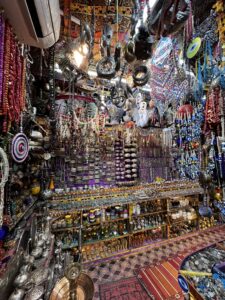
From there, it’s an easy drive on a picturesque road that carves through the mountains to the coastal town and original capital city of Oman, Muttrah, where you’ll find Muttrah Souq. One of the oldest souqs in the Arab world and located on the harbourside, it’s a heady – and somewhat overwhelming – mix of old and new, selling everything from tourist souvenirs to heavy gold jewellery, pottery, silver, spices, perfumes and Bedouin handicrafts. I didn’t find the salesmen as pushy as they can be in other parts of the Middle East, but I’d definitely recommend haggling to get the best prices – it’s not rude; it’s expected. Close by is the fish market, again featured in the book, which is ideally visited first thing in the morning when the fishermen bring in their catch.
 I wanted to see how my characters might have lived as expatriates in Muscat, so I took a drive to the residential area of Qurum, where bougainvillea tumbled over the walls of white-washed villas, and swimming pools glinted in the sunshine – perfect for what I wanted. If beaches are your thing, Qurum Beach is worth a look. Close to cafés and shops and with easy parking, it’s also where you’ll find much of Muscat out walking, chatting, eating and socialising on cooler evenings.
The big draw for me on this visit, though, was the desert. Full disclosure: I love to ride horses in the desert in the UAE so I’m very familiar with the colours and textures of the sand as the wind moves it; with the scuttling wildlife that inhabits the wilderness; and with the oranges and indigoes of a desert sunset, and all of this is in the book. But the thing about the desert that you might not realise until you’ve experienced it is the absolute silence, especially at night so, if you’re in Oman – or anywhere in Arabia for that matter – I’d definitely recommend trying to experience at least one night in a desert camp.
Ideal for a camping trip, Wahiba Sands, also known as Sharqiya Sands, is a little over two hours’ drive from the heart  of Muscat. The road cuts through the mountains as you leave the city behind, then you continue through a barren landscape until you hit the rolling, golden dunes of the desert and, eventually, the town of Bidiya, which is where you’ll head off the road and onto the sand. If you’re driving yourself, don’t forget to let your tyres down!
Because my tourists were led by an ex-resident who knew the ropes, they eschewed an organised camp and did their own thing, but in Wahiba Sands you’ll find desert camps to cater to all tastes and budgets and almost all of them offer return transfers from the city so you don’t need to worry about a thing. Camps are largely of a very high standard with air-conditioning and/or fans and bathrooms, although I’d recommend thinking about what size of camp might best suit you and considering how much noise and light pollution there might be at each.
 Camp activities might include camel rides, sand-boarding, ATV-driving and ‘dune-bashing’ in a four-wheel-drive, which, with some dunes cresting at 100 metres high, is really not for the faint-hearted; in my experience, those drivers really enjoy the passengers’ screams! The biggest draw, though, is watching sunrise and sunset, and counting the stars that hang bright in an inky black sky. There’s really nothing like it.
Annabel Kantaria
Join team TripFiction on Social Media:
Twitter (@TripFiction), Facebook (@TripFiction.Literarywanderlust), YouTube (TripFiction #Literarywanderlust), Instagram (@TripFiction) and Pinterest (@TripFiction) and BlueSky(tripfiction.bsky.social) and Threads (@tripfiction)
 Please wait...