 Grey Bees
 Red Famine
 Baba Dunja’s Last Love
 The House with the Stained-Glass Window
Talking Location With … Nick Wilkshire
Five Great Books set in UKRAINE
24th February 2022
FIVE GREAT BOOKS SET IN UKRAINE
Until a few years ago, I had no real sense of Ukraine as a country. I had watched Chernobyl unfold, I had learned that Pripyat was the closest town to the disaster area I had friends of friends who lived in Kyiv (which I gather is correctly pronounced Keev), I knew about the atrocities in the first half of the century. Then, as a judge on the Edward Stanford Travel Writing Awards 2020 (Fiction, With a Sense of Place), I came to read Snegurochka by Judith Heneghan, one of the six shortlisted titles. And I found it engrossing. It depicted a world that I knew from my early days and my familiarity with life in the East Block. The desolate housing there, exemplified nearer home in the former Easter Sector of Berlin, for example, huge swathes of concrete blocks of flats in suburbs like Marzahn-Zehlendorf in Berlin. I also crossed into East Germany and had a small sense of what was going on “on the other side”. The book spoke to me.
The book was incredibly redolent of a time and place, which now helps me further imagine what must be going on in these troubled times, for the Ukrainians, as they come under attack from Putin’s Russian forces. It is barely imaginable how the situation has come to this. I truly believe that reading books set in a specific location can aid understanding, whether fiction or otherwise. Literature is a great way of understanding culture and attitudes.
As I found Snegurochka (a Snow Maiden in Russian literature) acted like a door into a world about which I knew little, I thought I would collate selected books set in Ukraine that might also offer a window to readers who want to gather insight and learning about this part of the world.
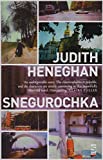
Snegurochka by Judith Heneghan
Kiev 1992. Rachel, a troubled young English mother, joins her journalist husband on his first foreign posting in the city. Terrified of their apartment’s balcony, she develops obsessive rituals to keep her three-month old baby safe. Her difficulties expose her to a disturbing endgame between the elderly caretaker and a local racketeer who sends her a gift that surely comes with a price. Rachel is isolated yet culpable with her secrets and estrangements. As consequences bear down she seeks out Zoya, her husband’s fixer, and the boy from upstairs who spies on them all.
Home is uncertain, betrayal is everywhere, but in the end there are many ways to be a mother.
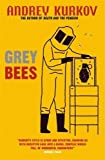
 Grey Bees by Andrey Kurkov, (Translated by Boris Dralyuk)
Little Starhorodivka, a village of three streets, lies in Ukraine’s Grey Zone, the no-man’s-land between loyalist and separatist forces. Thanks to the lukewarm war of sporadic violence and constant propaganda that has been dragging on for years, only two residents remain: retired safety inspector turned beekeeper Sergey Sergeyich and Pashka, a “frenemy” from his schooldays.
With little food and no electricity, under ever-present threat of bombardment, Sergeyich’s one remaining pleasure is his bees. As spring approaches, he knows he must take them far from the Grey Zone so they can collect their pollen in peace. This simple mission on their behalf introduces him to combatants and civilians on both sides of the battle lines: loyalists, separatists, Russian occupiers and Crimean Tatars. Wherever he goes, Sergeyich’s childlike simplicity and strong moral compass disarm everyone he meets.
But could these qualities be manipulated to serve an unworthy cause, spelling disaster for him, his bees and his country?
Grey Bees is as timely as the author’s Ukraine Diaries were in 2014, but treats the unfolding crisis in a more imaginative way, with a pinch of Kurkov’s signature humour. Who better than Ukraine’s most famous novelist – who writes in Russian – to illuminate and present a balanced portrait of this most bewildering of modern conflicts?
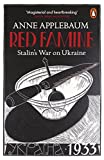
Red Famine by Anne Applebaum
In 1932-33, nearly four million Ukrainians died of starvation, having been deliberately deprived of food. It is one of the most devastating episodes in the history of the twentieth century. With unprecedented authority and detail, Red Famine investigates how this happened, who was responsible, and what the consequences were. It is the fullest account yet published of these terrible events.
The book draws on a mass of archival material and first-hand testimony only available since the end of the Soviet Union, as well as the work of Ukrainian scholars all over the world. It includes accounts of the famine by those who survived it, describing what human beings can do when driven mad by hunger. It shows how the Soviet state ruthlessly used propaganda to turn neighbours against each other in order to expunge supposedly ‘anti-revolutionary’ elements. It also records the actions of extraordinary individuals who did all they could to relieve the suffering.
The famine was rapidly followed by an attack on Ukraine’s cultural and political leadership – and then by a denial that it had ever happened at all. Census reports were falsified and memory suppressed. Some western journalists shamelessly swallowed the Soviet line; others bravely rejected it, and were undermined and harassed. The Soviet authorities were determined not only that Ukraine should abandon its national aspirations, but that the country’s true history should be buried along with its millions of victims. Red Famine, a triumph of scholarship and human sympathy, is a milestone in the recovery of those memories and that history. At a moment of crisis between Russia and Ukraine, it also shows how far the present is shaped by the past.
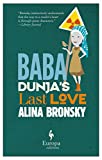
Baba Dunja’s Last Love by Alina Bronsky
Baba Dunja is a Chernobyl returnee. Together with a motley bunch of former neighbours, they set off to create a new life for themselves in the radioactive no-man’s land. Geiger counter and irradiated forest fruits be damned, there in that abandoned patch of Earth they have everything they need. Terminally ill Petrov passes the time reading love poems; Marja takes up with 100-year-old Sidorow; Baba Dunja writes letters to her daughter. Rural bliss reigns, until one day a stranger turns up, and the small settlement faces annihilation once again.
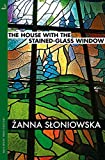
The House with the Stained-Glass Window by Zanna Sloniowska
In 1989, Marianna, the beautiful star soprano at the Lviv opera, is shot dead in the street as she leads the Ukrainian citizens in their protest against Soviet power. Only eleven years old at the time, her daughter tells the story of their family before and after that critical moment – including, ten years later, her own passionate affair with an older, married man.
Just like their home city of Lviv, which stands at the crossroads of nations and cultures, the women in this family have had turbulent lives, scarred by war and political turmoil, but also by their own inability to show each other their feelings. Lyrically told, this is the story of a young girl’s emotional, sexual, artistic and political awakening as she matures under the influence of her relatives, her mother’s former lover, her city and its fortunes.
BONUS BOOK
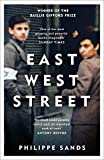 East West Street by Philippe Sands
When human rights lawyer Philippe Sands received an invitation to deliver a lecture in the Western Ukrainian city of Lviv, he began to uncover a series of extraordinary historical coincidences. It set him on a quest that would take him halfway around the world in an exploration of the origins of international law and the pursuit of his own secret family history, beginning and ending with the last day of the Nuremberg Trials.
In this part historical detective story, part family history, part legal thriller, Philippe Sands guides us between past and present as several interconnected stories unfold in parallel. The first is the hidden story of two Nuremberg prosecutors who discover, only at the end of the trials, that the man they are prosecuting may be responsible for the murders of their entire families in Nazi-occupied Poland, in and around Lviv. The two prosecutors, Hersch Lauterpacht and Rafael Lemkin, are remarkable men whose efforts led to the inclusion of the terms crimes against humanity and genocide in the judgment at Nuremberg. The defendant, Hans Frank, Hitler’s personal lawyer and governor-general of Nazi-occupied Poland, turns out to be an equally compelling character.
The lives of these three men lead Sands to a more personal story as he traces the events that overwhelmed his mother’s family in Lviv and Vienna during the Second World War. At the heart of this book is an equally personal quest to understand the roots of international law and the concepts that have dominated Sands’ work as a lawyer. Eventually he finds unexpected answers to his questions about his family in this powerful meditation on the way memory, crime and guilt leave scars across generations and the haunting gaps left by the secrets of others.
IF YOU WOULD LIKE TO SEE OUR FULL – AND GROWING – LIST OF BOOKS SET IN UKRAINE, JUST ACCESS OUR DATABASE
Tina for the TripFiction Team
Join Team TripFiction on Social Media:
Twitter (@TripFiction), Facebook (@TripFiction.Literarywanderlust), YouTube (TripFiction #Literarywanderlust), Instagram (@TripFiction) and Pinterest (@TripFiction)
 Please wait...