Novel set in PHILADELPHIA
Novel set mainly in DRESDEN and PARIS
23rd August 2021
Kokoschka’s Doll by Afonso Cruz, novel set mainly in Dresden and in Paris. Translated by Angel Gurria-Quitana and Rahul Bery.

Narrated with elegance and impeccably translated from the Portuguese, Koshoshka’s Doll is a work of fine literary fiction. Immediate yet subtle, straight-forward yet sophisticated, funny yet philosophical, what words to throw at the manner in which this story is told? The story opens with Isaac Dresner, a Jew hiding in the basement of a pet shop who, from beneath the floorboards, issues the proprietor Bonifaz Vogel with instructions. Bonifaz suffers ‘cranial ellipses’, which is a neat way of saying he is mentally impaired, something Isaac below struggles to figure out.
The story soon moves from Dresden to Paris, tracking the bruised and battered lives of Bonifaz and Isaac and his new wife and artist Tsilia Kacev. Then another character from Dresden, frustrated author Mathias Popa, makes a grand entrance into the narrative via one of his books – Isaac having set himself up as a small publisher –a manuscript written by Thomas Mann and published as his own. And the reader is led back to Dresden and the Varga family, and into the story of Kokoschka’s Doll, scribed by Mathias Popa and concerning the story of Adele Varga’s grandmother. Mathias is a washed up never-has been suffering a chronic case of grandiosity, the sort of self-importance found in those whose talent got passed over, while also embodying the zeitgeist of the times with so many displaced, shattered, grieving. In reading Kokoschka’s Doll, you find yourself having to trust that Mathias Popa has any talent (the lot of any author passed over by traditional publishers).
The title of both the novel and the story within it, Kokoschka’s Doll – a reference to the Austrian painter who commissioned a life-size replica of his beloved after their affair ended and then spread rumours about the doll as though it were a real person – plays out in a brutal and tragic fashion. All the while, the fragmented storytelling gifts the reader various perceptions of reality, multiple perspectives from which to discern any truth.
As is so often the case with literary fiction, the genius lies in structural conception, and narrative execution and articulation all at once, the result of the original idea and endless fine judgements. In all these aspects, Alfonso Cruz provides a terrific example of the novel as a work of art. Kokoschka’s Doll dallies with the philosophy of religion and other currents of philosophical thought along with various aphorisms. There are echoes of Gunter Grass’s The Tin Drum. As with Grass, the profoundest and most spiritually apposite of philosophies are told through simplicities and naivetes and untrustworthy narrators, along with an innocence of mind.
Kokoschka’s Doll is thought provoking and provocative. Fatalism in the face of atrocity, the bombing of Dresden, an entire city annihilated, brings home that there are no good guys in warfare, just so many chess pieces knocked off the board until one king remains, the victor. The story folds in on itself, the humour of the absurd is ever present as a backbeat.
There is a trend in literary circles for cleverly constructed novels that subvert the linear timeframe and use jump cuts to the full. Authors tread a fine line between demonstrating literary prowess and losing their readers, their works fulfilling a need to study, dissect and discuss more than a need to entertain. To my mind, Cruz has penned a prize pleaser more than a crowd pleaser. Kokoschka’s Doll is superb but as far as escaping everyday reality and entering a gripping story world, this book is too fragmented and demanding for that. Yet there is no escaping that Kokoschka’s Doll represents masterful storytelling, reminding us once more of the literary canon and that perhaps from time to time we should challenge ourselves, exercise our minds, remind ourselves of this other, too often maligned non-genre that is literary fiction.
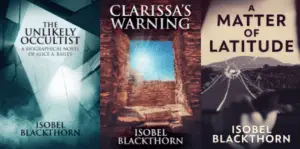
Guest review by Isobel Blackthorn for the TripFiction Team
Isobel is a prolific Australian novelist. She writes both contemporary/literary, thrillers and dark fiction. Follow her on Facebook, Twitter and via her website.
Join team TripFiction on Social Media:
Twitter (@TripFiction), Facebook (@TripFiction.Literarywanderlust), YouTube (TripFiction #Literarywanderlust), Instagram (@TripFiction) and Pinterest (@TripFiction)
 Please wait...