Novel set in PHILADELPHIA
Where China and Europe Meet by Roy Peachey, author of The Race
27th July 2021
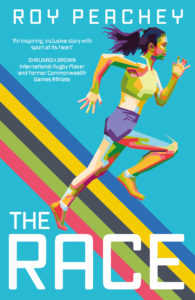
Where China and Europe Meet by Roy Peachey.
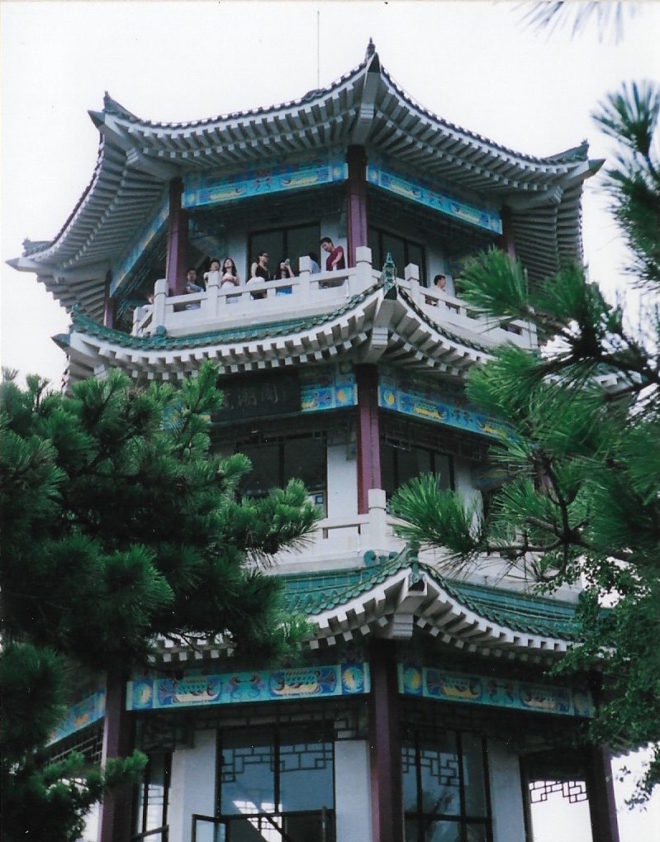
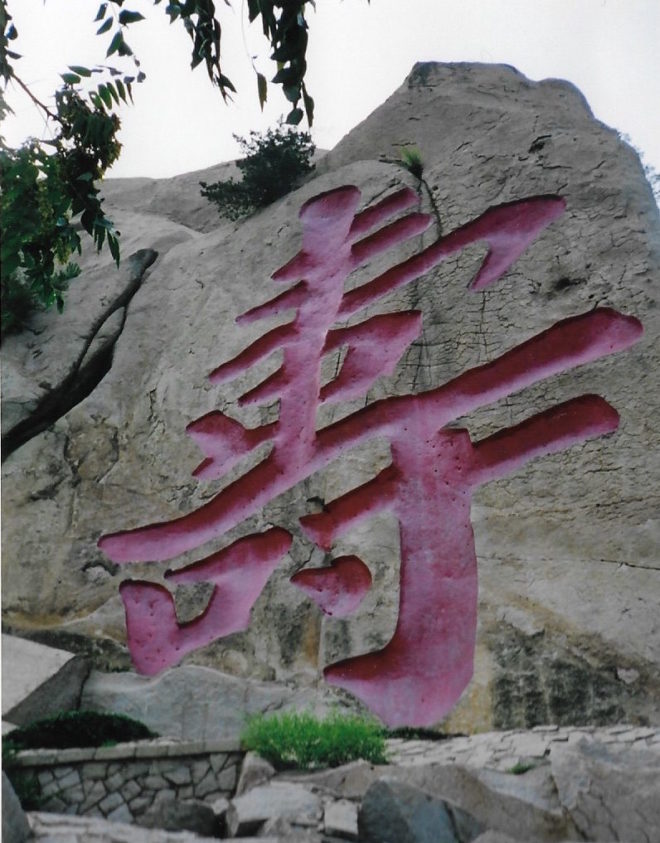
In 2005, my wife and I flew to Moscow and, from there, took the train to Beijing. It was a glorious trip. After a few weeks in the capital, we then took another train to Qingdao in Shandong, on China’s north-eastern coast. Qingdao is a fascinating place. Like many Chinese cities, it revels in newness but signs of its German, semi-colonial past are still apparent in the architecture and, most obviously, in the Tsingtao brewery, which is well worth a visit. But what most impressed me about Shandong was the glorious countryside. Some friends drove us along the coast to Laoshan, a Daoist holy mountain. What I remember most of that trip was the heat, the poor, dusty villages, and the mountains falling spectacularly to the sea. Then there was the mountain itself, an impressive granite landform inscribed at intervals with enormous Chinese characters. Shandong is a place where history, geography and modernity meet. Do check it out if you don’t know it already.
-

- Laoshan Pagoda
-
- Laoshan Shandong
A few years later, I was sitting in a university library in London, reading about Eric Liddell, star of the 1924 Olympics and the multi-Oscar-winning movie, Chariots of Fire. Liddell had been born in Tianjin, close to Beijing, and had returned there after his improbable success in the 400 metres at the Olympics. From Tianjin he moved to Xiaozhang in Hebei in the late 1930s to work in a hospital with his brother, Rob, because northern China was being fought over by Japanese occupying forces, Chinese warlords, and the Chinese national army. Liddell worked heroically in Xiaozhang but it couldn’t last. When Japan attacked Pearl Harbor, he was interned with hundreds of others in Weihsien prison camp in Shandong, not far from Qingdao. It was a curious experience, reading about Liddell’s amazing life story in that university library, not least because I had also been reading about the same part of China before and during World War I. What I didn’t know at the time was that two books would emerge from that fruitful reading session.

Qingdao
 The first book to appear was Between Darkness and Light, a literary-historical novel for adults about Wang Weijun, a member of the Chinese Labour Corps during World War I. The fictional Wang was born in Shanghai, moved to Beijing for university, and then, because of his one-eyed admiration of the West, joined the Chinese Labour Corps as a translator. Wang travelled to Qingdao by train, as I did, and then was driven up the coast, as I was, to Weihaiwei, from where many of the Chinese Labour Corps sailed to France, via Canada and Britain.
In France, he was based at the impressive headquarters of the Chinese Labour Corps at Noyelles-sur-Mer, at the mouth of the Somme. During the Great War, Noyelles was the base for thousands of men. It had its own state-of-the-art hospital, workshops, entertainment blocks, and much else besides. Now it is a sleepy village, well off the tourist track. Some people go there to watch the birds on the Baie de Somme. Others, like me, come looking for the World War I cemetery, a profoundly moving place.
841 labourers are buried at Noyelles, over half of them killed after the armistice was signed on November 11th, 1918. Discovering that terrible fact gave me the impetus to write Between Darkness and Light. The Chinese Labour Corps had been forgotten and their story needed to be told.

Noyelles-sur-Mer
Between Darkness and Light is a book about the meeting of China and the west, but when I finished it, I realised I still had more to say and so I started on The Race, a very different book in many ways. Between Darkness and Light is a book about a journey to the west, whereas The Race is a book about a journey to the east, though it starts in Britain – where Liddell and Lili, a young Chinese-British sprinter whose story shapes the book, are both educated – before moving to Paris, where Liddell played rugby for Scotland and competed in the Olympics, and back to China. We travel with Eric and Lili as they prepare for the race of their lives and, as we go, we gradually realise that the races we run aren’t always the ones for which we had prepared.
So what about us? Where might we go? There is not a great deal to be seen at the site of the Weihsien prison camp today, but I can recommend both Noyelles-sur-Mer in northern France and Shandong in China. Try travelling by train if you can. It’s one way of appreciating the landscape of the two countries and China’s amazing size. And if you need something to do while you’re travelling, you can always read a good book: I’ve got two I could recommend!
Roy Peachey, author of The Race
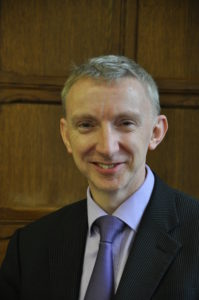 Roy lives with his wife, two daughters, two dogs, two cats, one rabbit, one tortoise, and a few fish. When he isn’t spending time with his family, writing books, or looking after the menagerie, Roy is a teacher and charity worker.
Peachey’s first novel for adults, Between Darkness and Light, the story of a translator with the Chinese Labour Corps during World War I, was published in 2019 by Eyrie Press. He is also the author of three non-fiction books: Out of the Classroom and Into the World; 50 Books for Life; and Did Jesus Go To School?
A big thank you to Cranachan Publishing and Antonia Wilkinson for inviting Tiny TripFiction to be part of the blog tour for The Race! Be sure to check out the other stops along the way!

Join Team TripFiction on Social Media:
Twitter (@TripFiction), Facebook (@TripFiction.Literarywanderlust), YouTube (TripFiction #Literarywanderlust), Instagram (@TripFiction) and Pinterest (@TripFiction)
 Please wait...