Novel set in the first half of the 20th Century HUNGARY
Talking Location With… Shelley Dark, author of Son of Hydra: VALLETTA, MALTA
12th January 2026
#TalkingLocationWith … Shelley Dark, author of Son of Hydra: VALLETTA, MALTA
 In the Mediterranean heat of August 1827, when the British sloop the Gannet approached Malta, nineteen-year-old Ghikas Voulgaris would have recognised the island long before she anchored. He had seen it on earlier voyages as the son of a prosperous Hydriot shipowner—a familiar waypoint on the eastern Mediterranean trade routes, golden buildings hugging limestone bastions, skyline of domes and campaniles rising above the twin harbours of Grand Harbour and Marsamxett.
But this arrival was different.
For a week he and his companions had been held in a temporary wooden enclosure on the bow of the ship—exposed to sun, wind, and the scorn of their captors. From that cramped patch of deck he would have watched the headland rise exactly as it always had, but knowing this time it would be his gaol on a charge of piracy, and possibly his end.
Malta had not changed.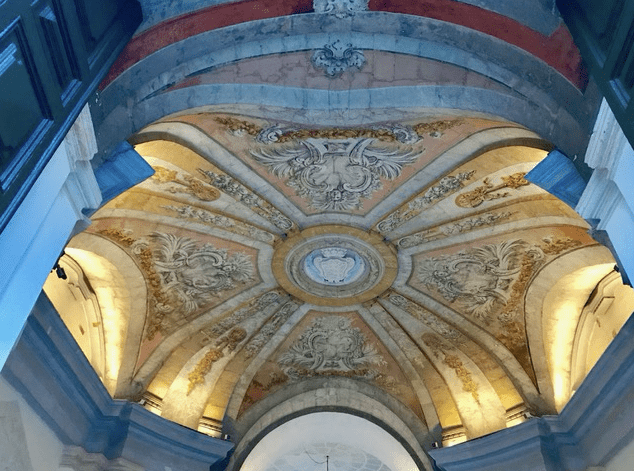
Ghikas had.
And nothing alters the appearance of a place as much as knowing what waits there.
An Unfinished Story
Nearly two centuries later, I approached Valetta too, though by air, not sea, and for reasons Ghikas could never have imagined. I was writing his story in the novel Son of Hydra, tracing his voyage from Hydra to Malta, Malta to London, London to Portsmouth, and finally on to the penal colony of New South Wales.
 But Malta was the hinge—where the boy he had been began to split from the man he would become.
I couldn’t write him truthfully without standing where he had stood. So I followed him.
We arrived in Valletta by aeroplane then car, through suburbs that were entirely forgettable—supermarkets, apartment blocks, a dog on a balcony. Then the road swung, buildings fell away, and suddenly we were inside the colossal stone gate of Valletta itself: golden, vertical, improbably theatrical, and looking almost exactly as it must have in Ghikas’ day, except for motor vehicles and me clutching the hotel booking.
It was early April, that lovely Maltese shoulder season when the air is fresh and the light clean. Valletta sits high on a limestone ridge between the two deep harbours, and the breezes run straight up the  alleys. The streets pitch and tilt like the deck of a ship—you take ten steps uphill, turn, and there—between two sandstone walls—is another glimpse of bright water.
And the balconies! Gallariji in every conceivable shape: modest, extravagant, bow-fronted, peeling paint, newly polished. They jut out above the narrow streets to catch light and breeze in a city so tightly built that sunlight can be a luxury. A form of architectural privacy—watching the world while remaining hidden, all with scenic views.
Place at Full Volume
Our hotel rooftop had a view across Grand Harbour to Fort Sant’Angelo—stone glowing honey-deep in the afternoon. We sat there with a drink on our first evening, watching the small boats zip in and out of their moorings, the flat water turning pink then silver.
 Valletta is not a quiet city. That night the streets erupted in celebration—banners, saints’ statues carried aloft after mass, bands and processions that grew louder every time I thought they had passed.
Dawn, by contrast, felt like a cool breath. St Elmo’s battlements were bathed in pale light, and the great rock-cut moat the Knights had carved by hand suddenly made sense of every line I’d read about the Great Siege, when in 1565, fewer than two thousand men at St Elmo held off some thirty thousand Ottoman troops for nearly a month, dying almost to the last man, but buying the time that saved the island.I began photographing door knockers the size of dinner plates, beautiful doors in impossible pastels, cats with the hauteur of minor nobility, and down near the boathouses at St Elmo, painted strokes on a wall, created when generations of boat owners wiped their brushes clean in the same place. I’d have bought it as a canvas.
Work (and Cake)
Most of my time was spent in the glorious National Library where the air smells faintly of old leather and 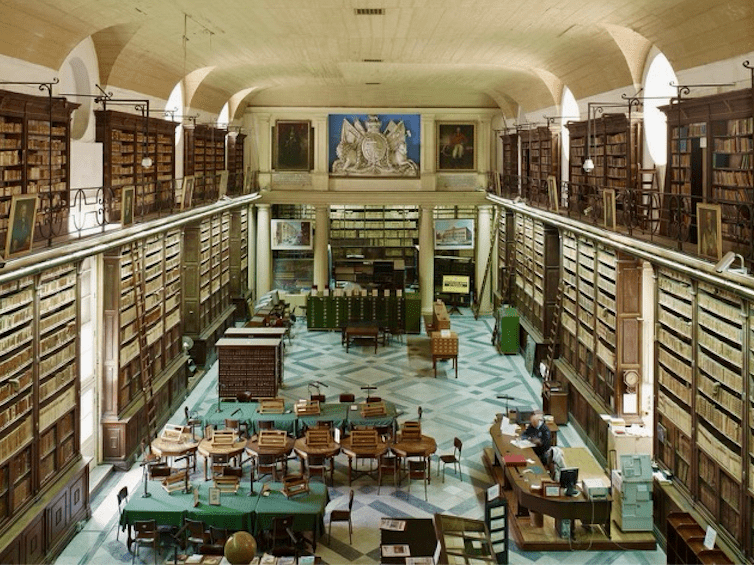 history, an historic building with remarkable wooden interior. We were issued dog tags marked RESEARCHER—my husband and I were both heady with our elevation in status—and shown into the great reading room, lined floor-to-ceiling with ancient volumes. When I requested a truly massive old book from Luis or Donald, it arrived with its own pillow—both dignified yet faintly comic—like tucking a manuscript in for a nap.
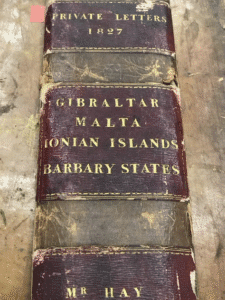 In Rabat I met archivists who treated my research as a shared treasure hunt. When my first and only ever bout of vertigo struck, Monica and Stephanie scrambled for cold compresses. Joseph looked genuinely alarmed at the sight of a green researcher.
Malta, I learned, takes care of its students of history.
Below The Palace
But the place that drew me across continents—where I had arranged permission long before I arrived—lay under the Castellania Palace.
Above ground the building façade is elegant, understated, and the interior is busy with the everyday work of the Department of Health. My guide, a keen historian, led the way. Behind and below that officialdom, across a courtyard and behind a heavy door, lie the old stone cells where Ghikas and the other Hydriots were held during their trial.
The moment the door behind us closed, the air changed.Cool. Still. Close. Arched stone ceilings. Damp walls. One cell had a high window—little more than a slit—but the others had none. I felt claustrophobia rise: visceral, unmistakable.
I stood there only minutes before stepping back into the spring light.
Ghikas didn’t have minutes.
He had eighteen months.
And I understood a little more of the man I was writing.
I left Valletta knowing what horror this beautiful city had once held for a nineteen-year-old Hydriot boy—but having fallen quite hopelessly in love with the magnificent city myself, and already planning my return.
What to do:
A dawn walk down to the waterfront near St Elmo’s, where the boaties’ shacks are built straight onto the rock
Take the lift up or down from the Upper Barrakka Gardens.
Watch the noon cannon.
Eat rabbit.
Photograph the balconies. All of them.
Visit the National Library—but first you must qualify as a researcher.
Go to the Co-Cathedral (the only church where I have ever seen a baptismal font filled with flowers) and see the Caravaggio.
Take a ferry across both harbours.
Go to Mdina for ancient alleys and more golden buildings, but above all for a big, fat piece of hazelnut-caramel chocolate cake at the Fontanella Tea Garden.
For beer lovers: Malta’s own Farsons Blue Label Amber Ale
Where to stay:
• in the old town: 66 Saint Pauls, a beautifully renovated palazzo.
• In Mdina: Xara Palace.
 Shelley Dark
Connect with Shelley via her website and catch her on Social Media: Facebook, Instagram
All photos ©️ Shelley Dark
Join team TripFiction on Social Media:
Twitter (@TripFiction), Facebook (@TripFiction.Literarywanderlust), YouTube (TripFiction #Literarywanderlust), Instagram (@TripFiction) and Pinterest (@TripFiction) and BlueSky(tripfiction.bsky.social) and Threads (@tripfiction)
 Please wait...