Thrilling novel set in WW1 LONDON
Talking Location With Shelley Noble: NEW YORK
13th March 2026
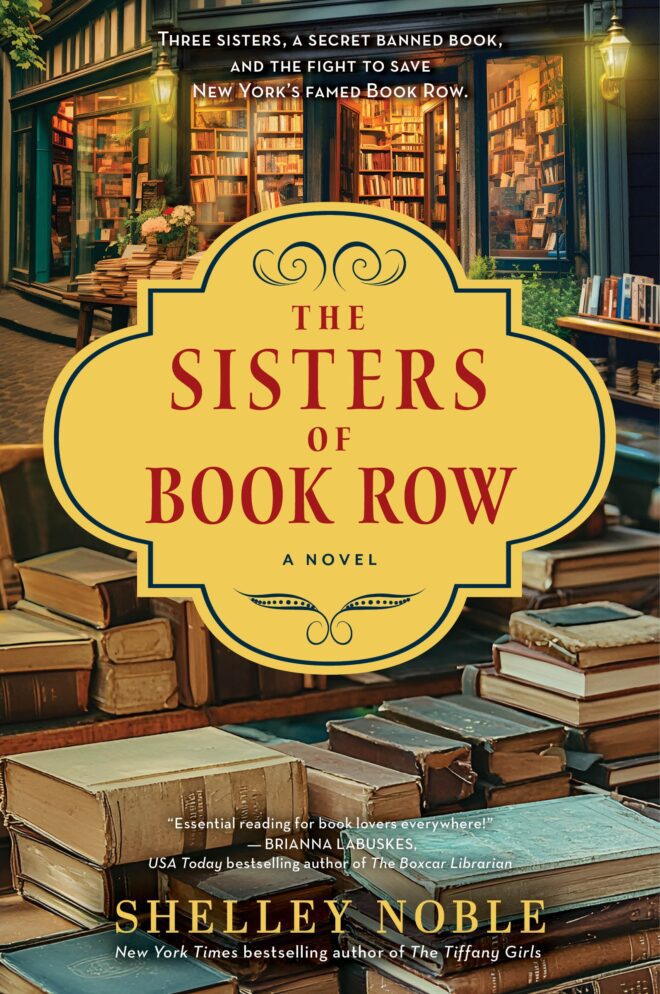
#TalkingLocationWith… Shelley Noble, author of The Sisters of Book Row: NEW YORK
Writing the Past Through Present-Day Manhattan
I write about Manhattan. Not the Manhattan of 8 million people, the hundred plus-storied skyscrapers, the clogged traffic and rumble of subways. My stories take place in a different New York, a time when automobiles were still frightening carriage horses on the avenues. When The New York Times’ twenty-five stories was the tallest building, a phenomenon. When Fifth Avenue was still a two-way street, the first subway was just being built. When Victorian women were becoming the New Woman even though they didn’t have the right to vote. Where Gilded Age wealth was not yet curtailed by a federal income tax.
I write about Manhattan at the turn of the twentieth century 1900–1915. I’m fortunate that I can do lots of research onsite.
When I walk down the streets, sit in a café, or stroll through Central Park, I’m not seeing what others are seeing as they rush to work, pop into the deli for “a buttered roll and a regular with sugar,” or even those who stop to gaze with the eyes of a tourist.
But I am a kind of tourist. A time tourist.
TIP#1: It takes concentration to achieve this state of mind, a way of looking to see not what everyone else is seeing, and do so while not becoming a danger to yourself and others. It’s a learned technique that takes practice. Start with a less crowded street.
My latest novel, The Sisters of Book Row, gave me a chance to hang out in one of my favorite neighborhoods in the city, Book Row—that few blocks of Fourth Avenue between Union Square and Astor Place where for years used and rare book stores, publishers, printers and newsstands, shared space with bakeries, butchers, tobacconists and Wanamaker’s department store. It was a lively place where they sold, discussed, argued about books, and most of all, protected each other against the overzealous book banner, Anthony Comstock.

I knew that I would use several landmark buildings to anchor my story. Cooper Union, Grace Church, Book Row, itself, and Union Square. Even though I’ve spent decades around the city, whenever I start a new novel, I get out the map. The current map.
TIP #2: Learn the overall visual plan of the story, the present landmarks first. That way you won’t be surprised to find that so many buildings and landmarks are missing. But more importantly, you’ll discover what is still there. Even if it’s no larger than a surviving doorway, it becomes a special treat that you might not have recognized if you hadn’t done your pre-homework. And that unexpected morsel can anchor an entire scene.
At the south end of Book Row, Cooper Union, an Italianate building, was founded in 1859 as a free university and was the first building to be originally built with an elevator shaft because Peter Cooper was convinced that an elevator would soon be a common thing. It still stands, along with a modern addition and is where my novel, The Sisters of Book Row, opens with youngest sister, Celia, learning that her mentor, Margaret Sanger, must flee to the continent to avoid arrest, leaving her loyalists to continue her work without her.
Moving north, today’s Fourth Avenue would be unrecognizable to a 1915 visitor. The buildings are mostly gone, replaced with apartment complexes, banks, and high rise corporations. But there is an occasional building that progress missed, nestled between the present while holding onto the past.
Between Tenth and Twelfth is the back entrance of Grace Church, a French Gothic Revival gem. Its garden plays a pivotal part of the Sisters plot. I placed my bookshops and businesses, along these blocks, based on old photos and descriptions (along with a bit of artistic license).
At the top of the Row is Union Square, home to the first Labor Day Parade, center of community and political activity and where my Applebaum sisters listen to a brass band while couples dance to the latest Joplin Rag, and shaved ices are hawked from carts along the sidewalks.
There are so many stories in New York City, that you could stand in one place and see the panorama of history unfold. New Yorkers are often impatient with gawkers, but no worries, they’ll brush by you mumbling “tourist” and leave you to your dreams.
TIP#3: For anyone working on a series. Life in the past changed rapidly. And so must your research. Not just the historical events, but clothing, food, literature, even transportation. You wouldn’t believe how quickly automobiles replaced the carriage from 1902 to 1907. It’s important to get it right.
ABOUT THE AUTHOR:
Shelley Noble is the New York Times and USA Today bestselling author of Whisper Beach, Beach Colors, and The Tiffany Girls, the story of the largely unknown women artists responsible for much of Tiffany’s legendary glasswork, as well as several historical mysteries. A former professor, professional dancer and choreographer, she now lives in New Jersey halfway between the shore, where she loves visiting lighthouses and vintage carousels, and New York City, where she delights in the architecture, the theatre, and ferreting out the old stories behind the new. Shelley is a member of Sisters in Crime, Mystery Writers of America, Women’s Fiction Writers Association, and Historical Novel Society.
Join team TripFiction on Social Media:
Twitter (@TripFiction), Facebook (@TripFiction.Literarywanderlust), YouTube (TripFiction #Literarywanderlust), Instagram (@TripFiction) and Pinterest (@TripFiction) and BlueSky(tripfiction.bsky.social) and Threads (@tripfiction)
 Please wait...