


Romance novel set in HERTFORDSHIRE and Cricklewood
Ten Great Books set in POLAND
4th May 2026
 Ten great books set in Poland
Poland is a resilient and diverse nation at the heart of Europe, where a tumultuous history meets a dynamic, modern economy. From the medieval charm of Kraków (and the horrors of nearby Auschwitz) to the soaring skyscrapers of Warsaw, to Gdansk (the birthplace of the Solidarity movement) Poland’s cities reflect a story of destruction and rebirth. Its landscape is equally diverse, spanning the windswept Baltic Coast in the north (with resorts such as Sopot), to the rugged Tatra Mountains in the south.
Poland has become a central geopolitical pillar of Eastern Europe. Beyond its political weight, the country is celebrated for its rich contributions to science and music – carrying the legacies of Copernicus and Chopin – and its spirit of unwavering endurance.
Here are ten of our favourite books set in this historic country.
 Swimming in the Dark by Tomasz Jedrowski – POLAND
‘You were right when you said that people can’t always give us what we want from them.’
Poland, 1980. Anxious, disillusioned Ludwik Glowacki, soon to graduate university, has been sent along with the rest of his class to an agricultural camp. Here he meets Janusz – and together, they spend a dreamlike summer swimming in secluded lakes, reading forbidden books – and falling in love.
But with summer over, the two are sent back to Warsaw, and to the harsh realities of life under the Party. Exiled from paradise, Ludwik and Janusz must decide how they will survive; and in their different choices, find themselves torn apart.
‘Swimming in the Dark’ is an unforgettable debut about youth, love, and loss – and the sacrifices we make to live lives with meaning.
The Good Doctor of Warsaw by Elizabeth Gifford – WARSAW
‘You do not leave a sick child alone to face the dark and you do not leave a child at a time like this.’
Deeply in love and about to marry, students Misha and Sophia flee a Warsaw under Nazi occupation for a chance at freedom. Forced to return to the Warsaw ghetto, they help Misha’s mentor, Dr Janusz Korczak, care for the two hundred children in his orphanage. As Korczak struggles to uphold the rights of even the smallest child in the face of unimaginable conditions, he becomes a beacon of hope for the thousands who live behind the walls.
As the noose tightens around the ghetto Misha and Sophia are torn from one another, forcing them to face their worst fears alone. They can only hope to find each other again one day…
Meanwhile, refusing to leave the children unprotected, Korczak must confront a terrible darkness.
Half a million people lived in the Warsaw ghetto. Less than one percent survived to tell their story. This novel is based on the true accounts of Misha and Sophia, and on the life of one of Poland’s greatest men, Dr Janusz Korczak.
The Librarian of Auschwitz by Antonio Iturbe – AUSCHWITZ / BIRKENAU
‘It wasn’t an extensive library. In fact, it consisted of eight books and some of them were in poor condition. But they were books. In this incredibly dark place, they were a reminder of less sombre times, when words rang out more loudly than machine guns…’
Fourteen-year-old Dita is one of the many imprisoned by the Nazis at Auschwitz. Taken, along with her mother and father, from the Terezín ghetto in Prague, Dita is adjusting to the constant terror that is life in the camp. When Jewish leader Freddy Hirsch asks Dita to take charge of the eight precious books the prisoners have managed to smuggle past the guards, she agrees. And so Dita becomes the secret librarian of Auschwitz, responsible for the safekeeping of the small collection of titles, as well as the ‘living books’ – prisoners of Auschwitz who know certain books so well, they too can be ‘borrowed’ to educate the children in the camp.
But books are extremely dangerous. They make people think. And nowhere are they more dangerous than in Block 31 of Auschwitz, the children’s block, where the slightest transgression can result in execution, no matter how young the transgressor…
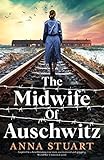
The Midwife of Auschwitz by Anna Stuart – AUSCHWITZ / BIRKENAU
Auschwitz, 1943: As I held the tiny baby in my arms, my fingers traced the black tattoo etched across her little thigh. And I prayed that one day this set of numbers, identical to her mother’s, would have the power to reunite a family torn apart by war…
Inspired by an incredible true story, this poignant novel tells of one woman’s fight for love, life and hope during a time of unimaginable darkness.
Ana Kaminski is pushed through the iron gates of Auschwitz beside her frightened young friend Ester Pasternak. As they reach the front of the line, Ana steps forward and quietly declares herself a midwife – and Ester her assistant. Their arms are tattooed and they’re ordered to the maternity hut. Holding an innocent new-born baby, Ana knows the fate of so many are in her hands, and vows to do everything she can to save them.
When two guards in their chilling SS uniforms march in and snatch a blond-haired baby from its mother it’s almost too much for Ana to bear. Consoling the distraught woman, Ana realises amidst the terrible heartache there is a glimmer of hope. The guards are taking the healthiest babies and placing them with German families, so they will survive. And there are whispers the war is nearly over… Ana and Ester begin to secretly tattoo little ones with their mother’s numbers, praying one day they might be reunited.
Then, early one morning, Ana notices the small bump under Ester’s thin striped clothing…
Treblinka by Chil Rajchman – TREBLINKA
Chil Rajchman, a Polish Jew, was arrested with his younger sister in 1942 and sent to Treblinka, a death camp where more than 750,000 were murdered before it was abandoned by German soldiers. His sister was sent to the gas chambers, but Rajchman escaped execution, working for ten months under incessant threats and beatings as a barber, a clothes-sorter, a corpse-carrier, a puller of teeth from those same bodies. In August 1943, there was an uprising at the camp, and Rajchman was among the handful of men who managed to escape. In 1945, he set down this account, a plain, unembellished and exact record of the raw horror he endured every day. This unique testimony, which has remained in the sole possession of his family ever since, has never before been published in English. For its description of unspeakably cruelty, Treblinka is a memoir that will not be superseded. In addition to Rajchman’s account, this volume will include the complete text of Vasily Grossman’s ‘The Hell of Treblinka’, one of the first descriptions of a Nazi extermination camp: a powerful and harrowing piece of journalism written only weeks after the camp was dissolved.
The Spies of Warsaw by Alan Furst – WARSAW
An Autumn evening in 1937. A German engineer arrives at the Warsaw railway station. Tonight, he will be with his Polish mistress; tomorrow, at a workers’ bar in the city’s factory district, he will meet with the military attaché from the French embassy. Information will be exchanged for money.
So begins THE SPIES OF WARSAW, with war coming to Europe, and French and German operatives locked in a life-and-death struggle on the espionage battlefield. At the French embassy, the new military attaché, Colonel Jean-Francois Mercier, a decorated hero of the 1914 war, is drawn in to a world of abduction, betrayal and intrigue in the diplomatic salons and back alleys of Warsaw. At the same time, the handsome aristocrat finds himself in a passionate love affair with a Parisian woman of Polish heritage, a lawyer for the League of Nations.
Colonel Mercier must work in the shadows, amidst an extraordinary cast of venal and dangerous characters – Colonel Anton Vyborg of Polish military intelligence, last seen in Furst’s THE POLISH OFFICER; the mysterious and sophisticated Doctor Lapp, senior German Abwehr officer in Warsaw; Malka and Viktor Rozen, at work for the Russian secret service; and Mercier’s brutal and vindictive opponent, Major August Voss of SS counterintelligence. And there are many more, some known to Mercier as spies, some never to be revealed.
The Auschwitz Violin by Maria Angels Anglada – AUSCHWITZ / BIRKENAU, KRAKOW
In the winter of 1991, at a concert in Krakow, an older woman with a marvelously pitched violin meets a fellow musician who is instantly captivated by her instrument. When he asks her how she obtained it, she reveals the remarkable story behind its origin. . . . Imprisoned at Auschwitz, the notorious concentration camp, Daniel feels his humanity slipping away. Treasured memories of the young woman he loved and the prayers that once lingered on his lips become hazier with each passing day. Then a visit from a mysterious stranger changes everything, as Daniel’s former identity as a crafter of fine violins is revealed to all. The camp’s two most dangerous men use this information to make a cruel wager: If Daniel can build a successful violin within a certain number of days, the Kommandant wins a case of the finest burgundy. If not, the camp doctor, a torturer, gets hold of Daniel. And so, battling exhaustion, Daniel tries to recapture his lost art, knowing all too well the likely cost of failure. Written with lyrical simplicity and haunting beauty-and interspersed with chilling, actual Nazi documentation-The Auschwitz Violin is more than just a novel: it is a testament to the strength of the human spirit and the power of beauty, art, and hope to triumph over the darkest adversity.
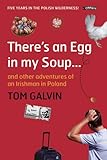
There’s an Egg in My Soup by Tom Galvin – POLAND
Five years in the Polish wilderness. Queues for groceries, unfathomable bus timetables, inexplicable traditions and truly bizarre soup – this is Poland in the mid-1990s, where Tom Galvin innocently went as a trainee teacher.
Without a word of Polish, he is plunged into a strange and rapidly changing culture, as the country shakes off its troubled and complex past and faces the challenges of being a part of modern Europe.
Tom spent five years dealing with long and freezing winters, lack of good food, loneliness and hardship, as he discovered the misery as well as the joy of Polish life. He returned in 2007, to find surprising changes to the country that had been his home for the first years of his working life.
An interesting and amusing account of living and working abroad, which documents a unique period of Polish history.
The Tattooist of Auschwitz by Heather Morris – AUSCHWITZ / BIRKENAU
‘I tattooed a number on her arm. She tattooed her name on my heart’.
In 1942, Lale Sokolov arrived in Auschwitz-Birkenau. He was given the job of tattooing the prisoners marked for survival – scratching numbers into his fellow victims’ arms in indelible ink to create what would become one of the most potent symbols of the Holocaust.
Waiting in line to be tattooed, terrified and shaking, was a young girl. For Lale – a dandy, a jack-the-lad, a bit of a chancer – it was love at first sight. And he was determined not only to survive himself, but to ensure this woman, Gita, did, too.
So begins one of the most life-affirming, courageous, unforgettable and human stories of the Holocaust: the love story of the tattooist of Auschwitz.
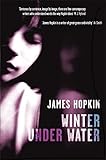
Winter Under Water by James Hopkin – KRAKOW
When Joseph meets Marta, who has come to the UK to research the forgotten histories of remarkable women from across Europe, he is captivated, and Marta feels the same: when she returns to her previous life, their relationship continues through letters and phone calls. Then Joseph decides to visit Marta in her native Poland. Interlinking Joseph’s often strange experiences with Marta’s letters to him, Winter Under Water is a book about who we are and who we choose to love: exploring issues of isolation and identity, of home and belonging, it is also, ultimately, a book that suggests you only truly know a person or a place when you can sit in silence and not feel compelled to break it — in any language.
Enjoy our selection of great books set in Poland!
Tony for the TripFiction team
Join team TripFiction on Social Media:
Twitter (@TripFiction), Facebook (@TripFiction.Literarywanderlust), YouTube (TripFiction #Literarywanderlust), Instagram (@TripFiction) and Pinterest (@TripFiction) and BlueSky(tripfiction.bsky.social) and Threads (@tripfiction)
 Please wait...